Token Authentication
As an alternative to using SSL certificates or an API Key for authentication when sending data to the /datafeed endpoint, you can use a
JSON Web Token
Token
Typically refers to an authentication token that may be used for user authentication. A Stroom API Key is a form of authentication token.Click to see more details....
Using a token for authentication requires that Stroom or Stroom-Proxy have been configured with identityProviderType set to EXTERNAL_IDP (see External IDP for details on the configuration for an external IDP and how to generate a token).
To attach a token to the request you just need to set the HTTP header Authorization with a value of the form
Bearer YOUR_TOKEN_GOES_HERE
The Flow
The sending system obtains a token from the Identity Provider (IDP) Identity Provider (IDP) An Identity Provider is a system or service that can authenticate a user and assert their identity. Identity providers can support single sign on (SSO), which allows the user to sign in once to the Identity Provider so they are then authenticated to all systems using that IDP.Click to see more details... for its own identity, then presents it with each request. Stroom or Stroom-Proxy verifies that token against the IDP’s published signing keys, exactly as it would verify any other bearer token.
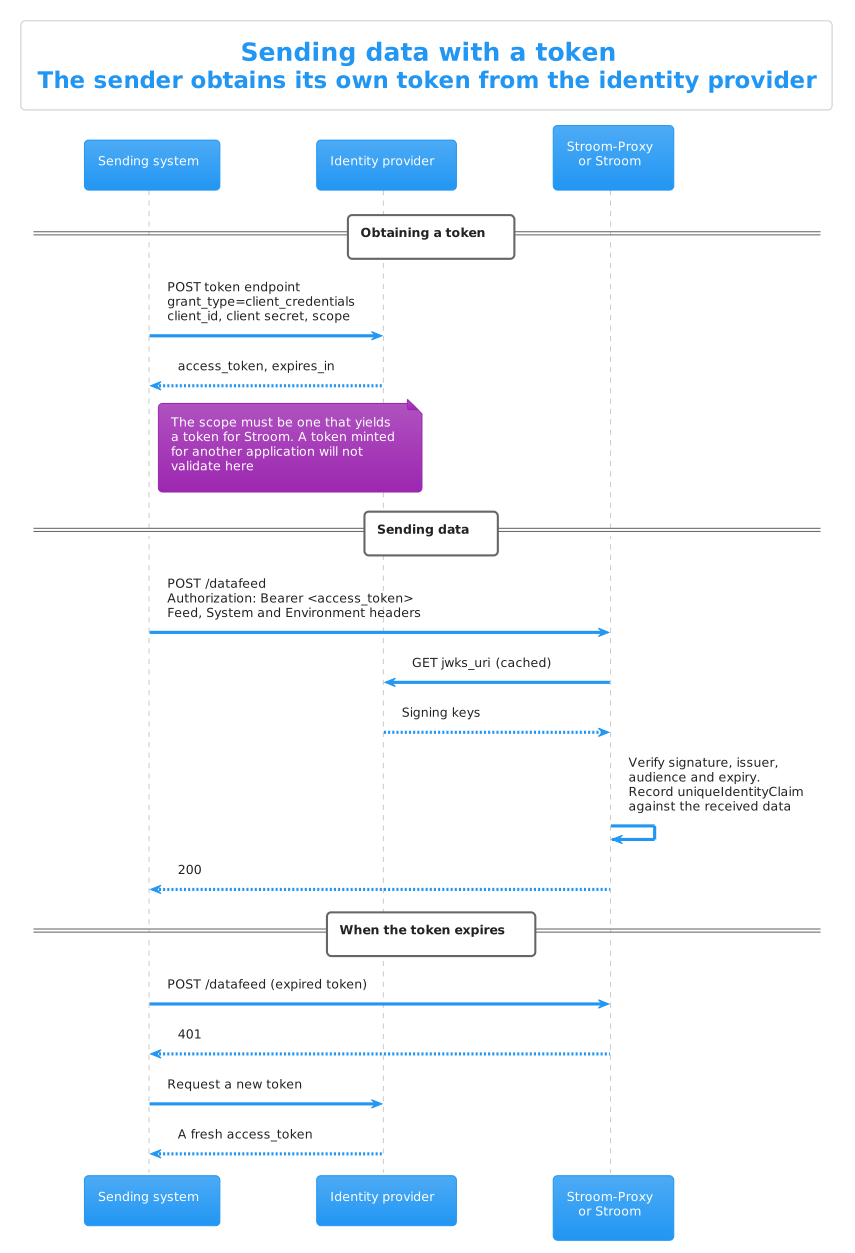
Tokens are short lived, typically around an hour, so a sender must obtain a fresh one when the old one expires rather than caching one indefinitely.
See Also
See Tokens for API Use for creating the client credentials a sender uses, and Microsoft Entra ID for a worked example with one provider.