
- Overview
- Getting Started
- Quick Start Guide
- Core Concepts
- Users
- Models
- Creating a Model
- Model Card
- Model Card
- Importing Model Card Text
- Comparing Model Cards
- Creating a Release
- Uploading Files
- Uploading Images
- Model Templating
- Data Cards
- Creating a Data Card
- Managing Data Cards
- Using a Model
- Browsing the Marketplace
- Requesting Access
- Using a Pushed Docker Image
- Downloading Files
- Reviews
- Understanding Reviews
- Reviewing
- Reviewing a Release
- Reviewing an Access Request
- Reviewing a Model Card Lifecycle
- Review Outcomes
- Security Scanning
- File Scanning
- Image Scanning
- Inferencing
- Creating an Inference Service
- Managing Inference Services
- Model Mirroring
- Creating a Mirrored Model
- Editing a Mirrored Model Card
- Untrusted Models
- Untrusted Models
- Deletion
- Deleting a File
- Deleting a Model
- Soft Deletion
- Bailo Metrics
- Viewing Bailo Metrics
- Programmatic Access
- Authentication
- Personal Access Tokens
- Python Client
- OpenAPI Reference
- Webhooks
- Administration
- Getting Started
- Deployment Architecture
- App Configuration
- Model Lifecycle Configuration
- LLM
- LLM Import
- Schemas
- Understanding Schemas
- Create a Schema
- Upload a Schema
- Schema Migrations
- Review Roles
- Managing Review Roles
- Assigning Roles to Schemas
- Federation
- Peer Integration
- Microservices
- Artefact Scanners
- Helm
- Basic Usage
- Configuration
- Isolated Environments
- Migrations
- Bailo v0.4
- Bailo v2.0
- DataBase Scripts
- Reference
- Glossary
- Roles & Permissions
- Troubleshooting & FAQ
Model Images
Common questions this page answers:
- How do I push a container (Docker) image to Bailo?
- How do I stream a container image from another registry to Bailo?
- How do I pull a container (Docker) image from Bailo?
- How do I add a container image to a release?
Pushing a Docker image
Container (Docker) images can be pushed to the Bailo registry and associated with a specific model. These images can later be used in model releases.
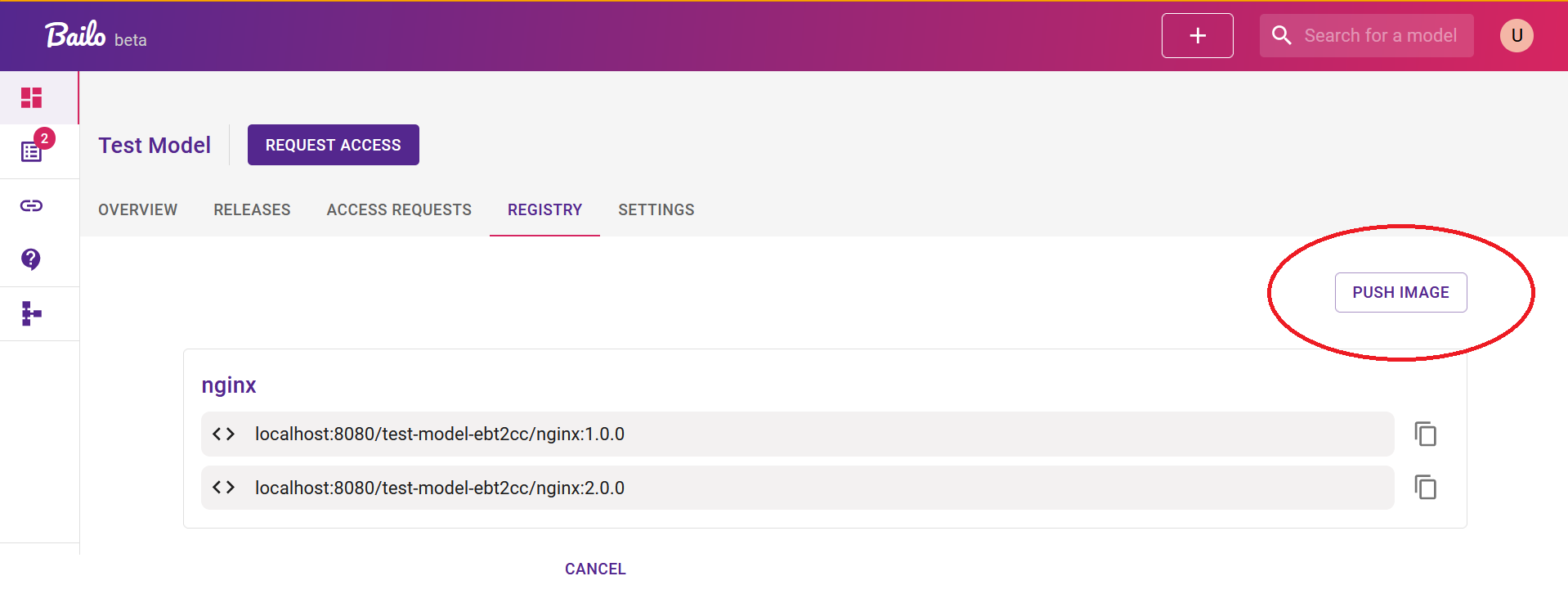
The screenshot above shows the model Registry tab with a push image button.
The process is:
- Create a token in the UI to obtain Docker credentials
- Run
docker login <registryAddress> -u <accessKey>- When prompted for a password, use the
secretKey
- When prompted for a password, use the
- Tag the image:
docker tag <image> <registryAddress>/<modelId>/<imageName>:<tag> - Push the image:
docker push <registryAddress>/<modelId>/<imageName>:<tag>
Streaming an image from another registry
If you want to copy a container image directly from another registry into Bailo without pulling it locally first, you
can use docker buildx imagetools create. This is useful for transferring images - including multiplatform images -
between registries.
The process is:
- Log in to both the source and destination registries
- Run the following command to stream the image directly from the source registry to Bailo:
docker buildx imagetools create \
  --prefer-index=false \
  --tag <registryAddress>/<modelId>/<imageName>:<tag> \
  <sourceRegistry>/<imageName>:<tag>
--prefer-index=falseensures a single manifest is created rather than an index, which avoids compatibility issues with some container runtimes--tagspecifies the destination in the Bailo registry- The final argument is the full source image reference
This streams the image layers directly between registries without storing them on your local machine, which is faster
and uses less disk space than a pull-tag-push workflow. Other tools such as skopeo copy can also stream images between
registries without a local pull.
Using a image in a release
After pushing an image, it becomes selectable when drafting a release. Choose the image from the dropdown in the release creation form.
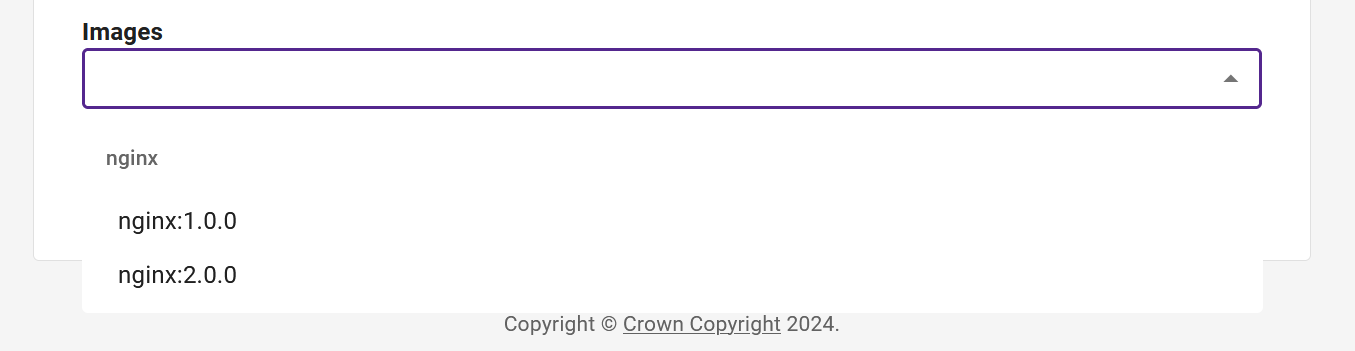
The screenshot above shows the image selection dropdown in the release creation form.
Accessing an image
Images attached to a release are listed in the Releases tab.
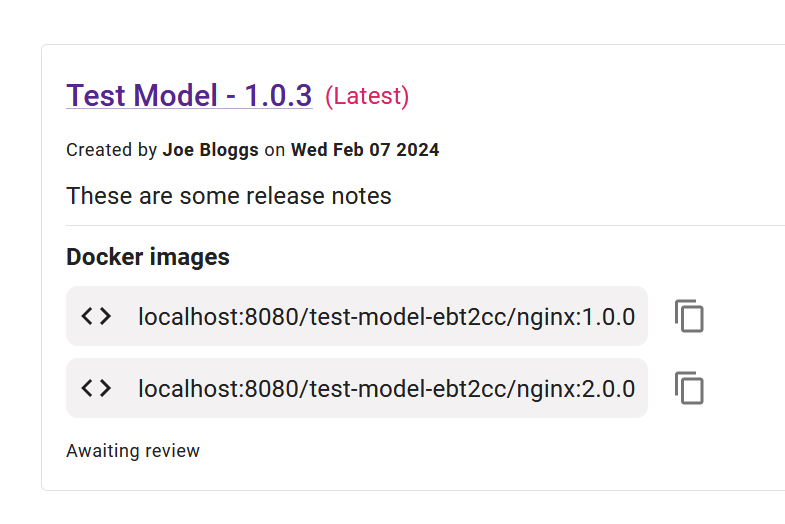
The screenshot above shows a release in the Releases tab with attached container images listed.
You can pull an image using:
docker pull <imagePath>
Copyright © Crown Copyright 2026.