

- Overview
- Users
- Managing Models and Releases
- Uploading Artifacts
- Creating a Model
- Completing the Model
- Creating a Release
- Uploading Files
- Uploading Images
- Using a Model
- Requesting Access
- Personal Access Tokens
- Using a Pushed Docker Image
- Downloading files
- Using scanners
- File scanning
- Image scanning
- Deletion
- Deleting a File
- Deleting a Model
- Soft Deletion
- Model Mirroring
- Creating a Mirrored Model
- Editing a Mirrored Model Card
- Reviews
- Reviewing Releases and Access Requests
- Reviewing a Release
- Reviewing an Access Request
- Reviewed Releases and Access Requests
- Releases
- Access Requests
- Reviewing model card lifecycle
- Programmatically using Bailo
- Authentication
- Open API
- Webhooks
- Python Client
- Administration
- Getting Started
- App Configuration
- Microservices
- Artefact Scanners
- Helm
- Basic Usage
- Configuration
- Isolated Environments
- Schema
- Create a Schema
- Upload a Schema
- Migrations
- Bailo v0.4
- Bailo v2.0
- DataBase Scripts
Uploading docker images
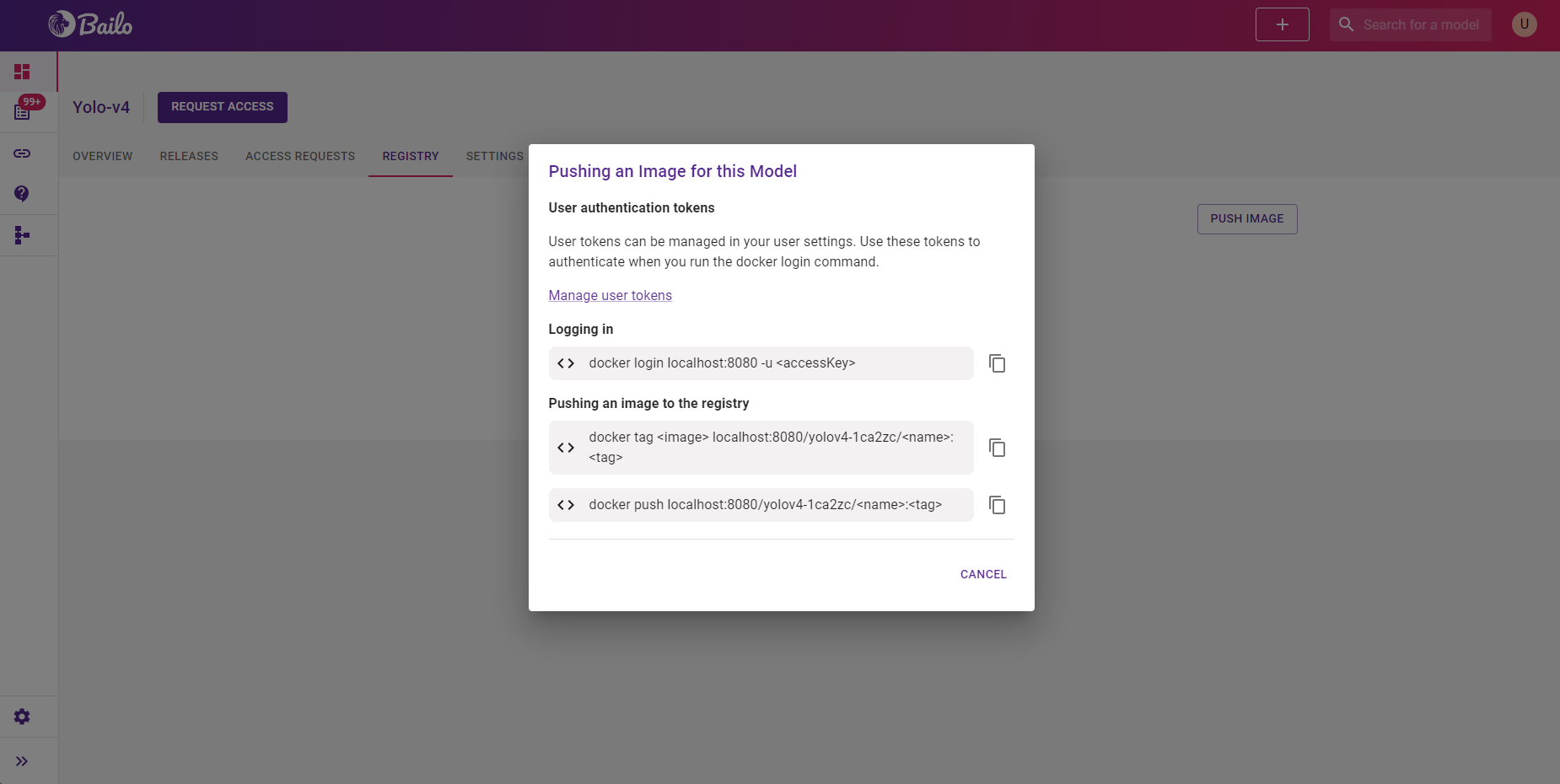
Bailo uses a Docker registry to store container images associated with models. Unlike files, Docker images are model‑specific: you push an image to a model first, and then explicitly attach it to one or more releases.
Pushing an image to a model
To push a Docker image to Bailo, navigate to your model and open the Registry tab. This tab provides step‑by‑step instructions tailored to your model and registry.

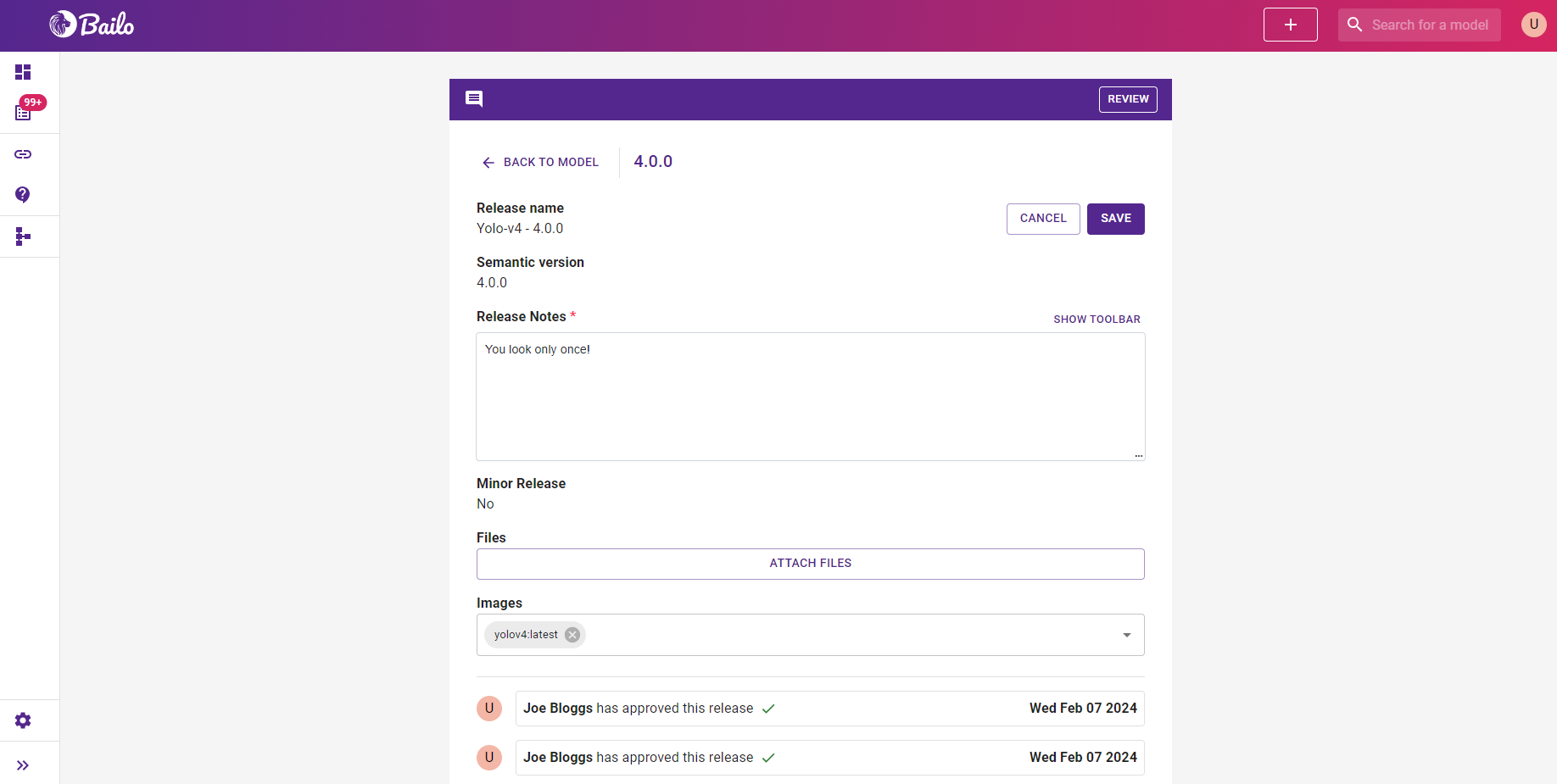
Adding an image to a release
Once the image has been successfully pushed to Bailo’s registry, it becomes available to attach to a release.
Edit an existing release or create a new one, then select the image from the available list.

What is a Docker container?
In the context of Bailo, a Docker container is an isolated, self‑contained application environment used to run a model. Packaging models as containers allows them to be started quickly, run consistently across environments, and used for inference without additional setup.
Copyright © Crown Copyright 2026.